Kobada and Gosso Deposits return high-grade drilling results

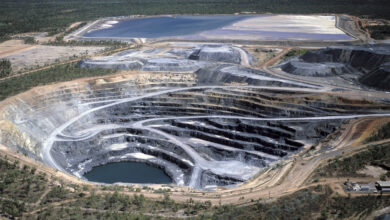
Toubani Resources Ltd. is pleased to announce drill results from RC drilling at the Kobada Gold Project in southern Mali. The Kobada Project hosts 2.2 Moz1 in Mineral Resources, which occurs over a 4.5km strike length and is predominantly oxide and open-pittable.
A short RC program was completed targeting the footwall contact to mineralisation at Kobada Main Deposit, designed by the Company’s independent resource consultants as part of the current MRE update. Drilling at Gosso aimed to infill and test extensions to mineralisation intersected in historical drilling to confirm continuity of mineralisation and provide a more robust geological interpretation to inform future drilling and resource modelling. Drilling continues at Kobada, with rigs operating to the south of Kobada to test extensions to the main mineralised structures before commencing grade control drilling.
Toubani Managing Director, Phil Russo, commented: “We have often said that the more we drill, the more gold we find, and once again Kobada provides us with results to follow up on. These footwall zones are more coherent and higher-grade than anticipated, providing us with new data and targets for our next phase of deep drilling at Kobada. We are looking forward to the imminent completion of the MRE update and these results certainly have been worth the short delay to incorporate into the estimate. The results from Gosso are also encouraging as we continue to develop the Project pipeline at Kobada to enhance the Project life and provide operational flexibility. With construction continuing on track for first gold, we are building a robust, long-life operation.”

Summary of RC drill results at Kobada Main Deposit
Drilling at Kobada Main was designed by the Company’s independent resource consultants to intersect the footwall contact on certain specific sections to improve the mineralisation interpretation at an appropriate level of detail. Drilling intersected significant thicknesses of mineralisation, with certain zones at depth more substantial than the current mineralisation interpretation. Results are accordingly expected to increase confidence in the near surface interpretation to 100m depth (early phases of mining) and potentially increasing resources at depths between 100m and 200m. Interpretation and modelling of these results is well advanced and represents a key dataset ahead of finalising the MRE update.
All assays received are tabulated in Appendix 1 with significant intersections including:
- 8m at 1.43g/t gold from 111m,
17m at 2.65g/t gold from 129m,
10m at 2.35g/t gold from 150m,
3m at 22.4g/t gold from 208m (KBRC26_VT001)
- 18m at 3.46g/t gold from 134m,
4m at 26.8g/t gold from 155m,
8m at 1.42g/t gold from 175m (KBRC26_VT002)
- 9m at 3.86g/t gold from 64m,
50m at 1.16g/t gold from 159m incl. 5m at 3.95g/t gold,
17m at 1.32g/t gold from 213m (KBRC26_VT003)
- 10m at 2.44g/t gold from 79m,
11m at 2.32g/t gold from 104m,
55m at 3.30g/t gold from 138m incl. 7m at 5.93g/t gold and 2m at 26.8g/t gold,
23m at 3.83g/t gold from 200m incl. 2m at 26.8g/t gold,
19m at 4.52g/t gold from 231m incl. 10m at 5.99g/t gold (KBRC26_VT004)
Summary of RC drill results at the Gosso Deposit
Drilling at Gosso was carried on a 50m x 50m grid to systematically test extensions to mineralisation intersected in historical drilling and improve the geological model. Results have confirmed the continuity of mineralisation along a 2.8km strike length with mineralisation remaining open along strike and at depth.
Drilling intersected broad mineralisation zones associated with the Gosso shear along with extremely high-grade mineralisation associated with veining. Almost all the results reported are from the oxide zone with fresh rock only intersected in the 2026 drilling at the northern end of the deposit. Interpretation and wireframing of results be carried out following the completion of the Kobada MRE with the aim to improve the geological understanding of the controls on mineralisation and enable follow up drilling to be targeted effectively.
All assays received are tabulated in Appendix 2 with significant intersections including:
- 5m at 2.42g/t gold from 39m
5m at 13.8g/t gold from 47m incl. 2m at 32.3g/t gold from 47m (GORC26_004)
- 8m at 1.88g/t gold from 43m
3m at 1.51g/t gold from 67m
13m at 0.67g/t gold from 77m
4m at 0.58g/t gold from 136m (EOH) (GORC26_005)
- 11m at 1.49g/t gold from 111m
4m at 0.65g/t gold from 136m (EOH) (GORC26_009)
- 7m at 2.57g/t gold from 16m (GORC26_012)
- 5m at 3.76g/t gold from 23m incl. 2m at 8.62g/t gold from 24m (GORC26_014)
- 1m at 2.23g/t gold from 32m
5m at 1.61g/t gold from 97m (GORC26_036)
- 1m at 15.8g/t gold from 4m (GORC26_047)
- 6m at 3.70g/t gold from 57m incl. 1m at 17.9g/t gold from 61m (GORC26_054)
- 1m at 16.7g/t gold from 7m
1m at 38.6g/t gold from 40m
3m at 1.27g/t gold from 77m (GORC26_055)
- 1m at 1.27g/t gold from 78m
1m at 5.53g/t gold from 112m
1m at 0.96g/t gold from 123m (GORC26_058)
- 3m at 4.75g/t gold from 147m (EOH) (GORC26_063)
- 1m at 2.65g/t gold from 68m
8m at 2.21g/t gold from 132m (EOH) (GORC26_066)
- 1m at 7.07g/t gold from 159m (GORC26_072)
- 1m at 7.14g/t gold from 16m (GORC26_073)
- 5m at 2.14g/t gold from 151m
incl. 1m at 9.15g/t from 152m (GORC26_075)
- 1m at 0.81g/t gold from 31m
8m at 3.18g/t gold from 63m
incl. 2m at 10.5g/t gold from 63m (GORC26_078)
- 3m at 2.42g/t gold from 14m
1m at 18.8g/t gold from 65m
8m at 2.32g/t gold from 82m (GORC26_080)
- 1m at 0.96g/t gold from 47m
1m at 0.91g/t gold from 57m
3m at 6.03g/t gold from 108m (GORC26_085)