The Democratic Republic of Congo (DRC) is taking seriously its role as a responsible steward of its significant mineral resources by setting higher standards of regulatory compliance relating to mining operations, environmental protection, and community engagement.
In order to ensure that production growth of its mineral output does not outpace the country’s readiness to meet international sustainability requirements, the DRC has introduced more stringent regulatory frameworks and is encouraging mining operators to adopt global best practices and to adhere to globally recognised reporting standards, such as the Joint Ore Reserves (JORC) Committee Code and the International Council on Mining and Metals (ICMM) principles.
The DRC is seeking to leverage the mining sector to achieve greater economic upliftment and to attract the trust – and dollars – of international investors seeking a return on their investment that aligns with global environmental, social, and governance (ESG) standards.

The ethical and sustainable exploration and processing of the country’s critical copper, cobalt, lithium and other minerals is key to accessing premium markets such as large industrial consumers and global commodity exchanges, which are looking for demonstrable ESG performance.
The government is deploying all the tools at its disposal to guide the sector into a new era of efficiency, transparency and sustainability.
Global engineering and scientific firm SRK Consulting has had a presence in the DRC for 16 years and drawing from its expertise across the continent and beyond, combined with a deep understanding of the local environment, the company has been able to play a significant role working with operators in support of the government’s efforts.
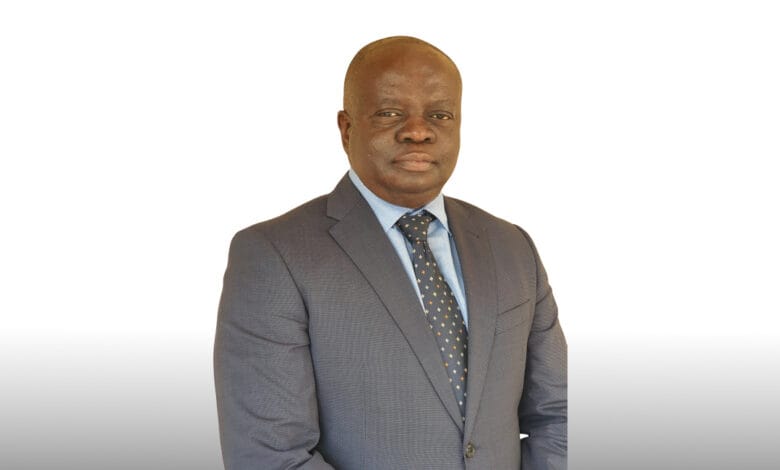
SRK Consulting Congo Chairman, Dominique Sambwa says, “From a past in which minerals were extracted often to the detriment of host countries, we have moved to global acknowledgement of the need to benefit local people and economies, and we are proud to have contributed over the last 16 years to the DRC in that regard.”
Supporting investor confidence
While investors seeking to raise capital in financial jurisdictions outside the DRC are bound by those countries’ compliance codes, various legal, technical and transparency requirements are in place within the DRC. These collectively drive mining operations, including resource estimation, towards compliance with standards such as JORC, NI 43-101, or the South African Code for the Reporting of Exploration Results, Mineral Resources, and Mineral Reserves (SAMREC), thereby supporting investor confidence.
Investors are also looking at operators’ implementation of advanced technologies that enhance resource efficiency and minimise environmental impact – these include water recycling systems, waste reduction, and improved energy efficiency, which are part of meeting sustainable development goals.
Despite advances in technical compliance, there remain areas of concern where investor confidence requires further shoring up. Artisanal and small-scale mining (ASM) in copper-cobalt is extensive and poorly quantified as formal resource estimation and reporting barely exist in the sector. The introduction of the Entreprise Générale de Cobalt (EGC) is a bid to certify ethical, legal, and traceable artisanal cobalt.
Recent audits by the DRC Court of Auditors found major under-reporting of mining revenues between 2018-2023 at several large mines. While the technical side of mining is robust at the industrial level, fiscal transparency and enforcement are still catching up, and that matters for long-term investor confidence.
A new approach to mining practices
Self-protection and increasingly stringent lender, OEM and market expectations have led to the DRC’s re-evaluation of its mining practices. Mining operators are fundamentally restructuring their ESG policies, with the support and inputs of globally experienced consultants such as SRK. These include formalising ESG due diligence to demonstrate a commitment to responsible sourcing through supply chains, and risk mitigation and subjecting ESG practices to third party audits that further demonstrates a greater willingness for accountability and transparency.
The implementation of stricter traceability controls such as digital tracking systems, and wider community engagement are combatting issues such as child labour and the inclusion of high-risk ore from unregulated artisanal sources.
Integrating environmental management measures into early project planning and mine expansion projects is being prioritised, through upgrades in water treatment, tailings and waste management, and biodiversity protection, addressing environmental risks and ensuring compliance with global standards.
Efforts at decarbonisation by shifting operations to hydropower and improving energy efficiency supports mining operators’ eligibility for sustainability linked financing, aligned with international climate goals.
Mitigating legal, reputational and operational risk includes increasing investment in community development, security and human rights initiatives. In addition, this fosters positive relationships with local stakeholders and enhances the sector’s social licence to operate.
Embedding all these best practices and compliance measures into mine design and operational planning from the outset and integrating sustainability considerations into every stage of exploration and production ensures that ESG becomes a tool and not an impediment for growth.
More than a technical partner
In addition to established copper-cobalt resources, the DRC is a source of massive deposits of lithium. SRK Consulting has positioned itself in the country as a support for local operators to integrate new exploration and processing standards for lithium that maintain quality across both emerging and established metal sectors.
“SRK trains local teams in hard skills including pegmatite-specific mapping, drilling and modern lithium QA/QC practices, resource estimation aligned with international codes, and provides tailored processing solutions for both established and new lithium operations. But the company also assists with ‘soft’ skills such as facilitating mindset transition, guiding operators in shifting from copper and gold focused approaches to lithium specific philosophies, and in capacity building by offering hands on training for Congolese geologists and metallurgists in ethical, analytical and ESG compliance,” says Sambwa.
With evidence of a growing economy already apparent in cities including Lubumbashi and Kolwezi, the DRC’s mining sector is creating a new ecosystem for widespread economic and social development whose benefits will be felt across the entire country.
In tribute to Dominique Sambwa

SRK Consulting is deeply saddened by the passing of Dominique Sambwa, Chairman of SRK Consulting Congo. Dominique was a highly respected geologist with more than 30 years of experience in the DRC. Since joining SRK Congo in 2010, and later serving as SRK Congo Chairman from 2021, he made a valued and lasting contribution to our practice in the DRC and to the mining industry in the region.
This article was compiled prior to Dominique’s untimely passing.