BME advances safer blasting in hot and reactive ground conditions

Hot holes and reactive ground conditions are becoming an increasingly significant challenge for mining operations, with the potential to compromise safety, disrupt production and undermine blast performance.
“While these conditions have been encountered for decades, the scale and complexity of modern mining have elevated their significance,” said Nishen Hariparsad, General Manager of Technology and Marketing at BME, during a recent company webinar titled Managing Hot Holes and Reactive Ground in Mining Operations.
“Successfully managing these risks requires scientific expertise, disciplined operational practices and a proactive approach to risk management.”

Different solutions for distinct hazards
Hennie van Niekerk, Regional Technical Services Manager at BME, explained that hot holes and reactive ground are distinct hazards that require different management strategies.
“Hot holes are primarily thermal hazards, while reactive ground is a chemical hazard involving reactions between ammonium nitrate-based explosives and reactive minerals,” he explained. “Although elevated temperatures may accelerate these reactions, each hazard requires its own controls.”
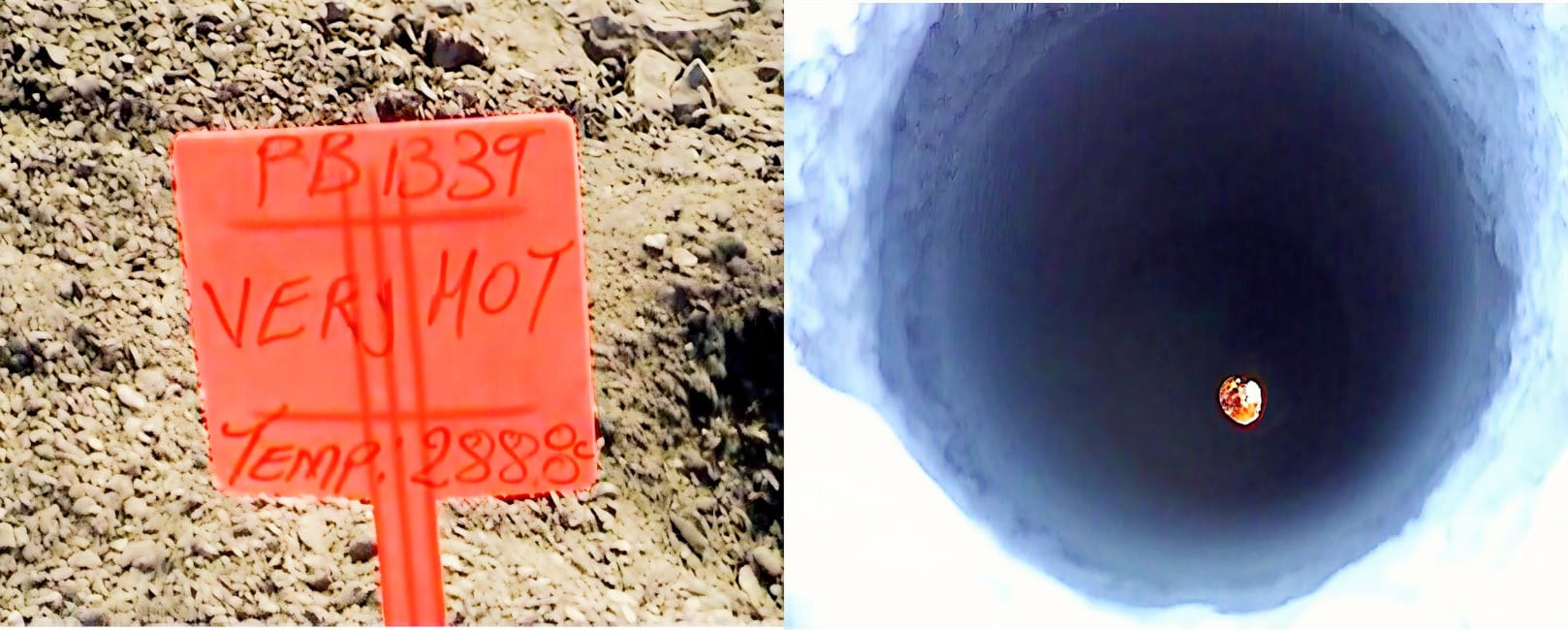
Hot holes are particularly prevalent in coal mining regions, where underground coal seam fires generate elevated ground temperatures, gas emissions and, in some cases, open flames. “Heat may reach blast holes through conduction, convection, radiation and geothermal gradients, depending on site conditions,” he said.
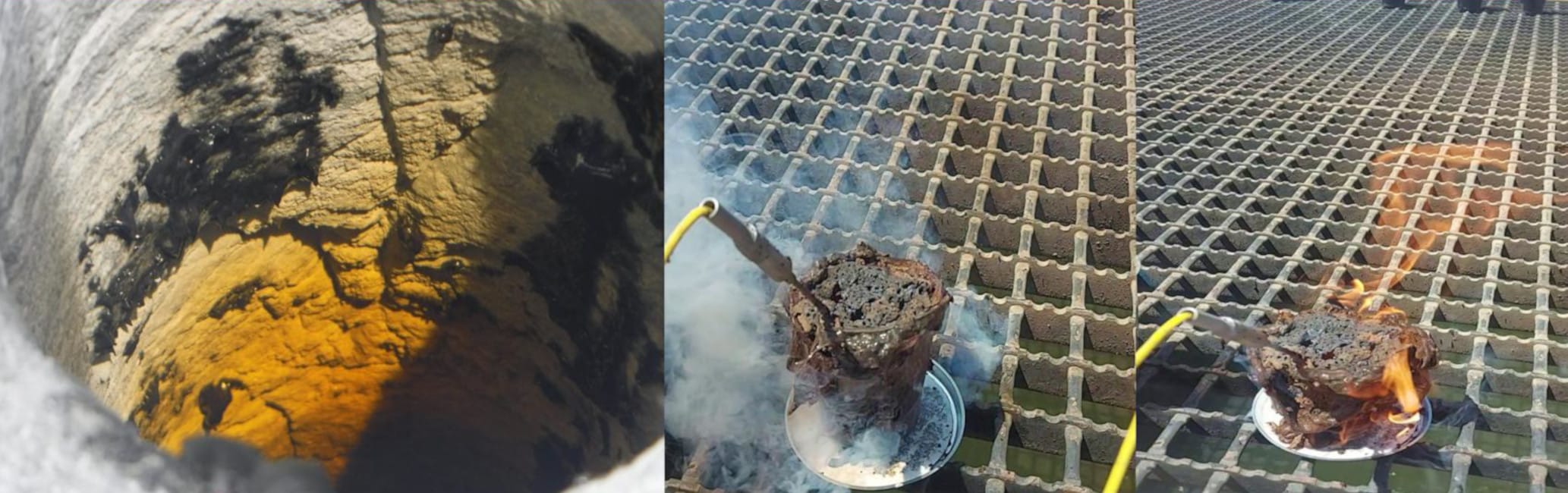
“Reactive ground often develops without obvious warning signs, which is why it is frequently referred to as the industry’s ‘silent killer’,” he said.
Victor Krause, Reactive Ground Specialist at BME, noted that visible heat is not always a reliable indicator of risk. “Some of the most severe reactions occur in blast holes showing little or no evidence of elevated temperatures before charging,” he said.
He explained that reactive ground develops when sulphide-bearing rock chemically interacts with ammonium nitrate-based explosives. He said that this creates the potential for heat generation, decomposition and, in extreme cases, premature detonation.
He added that oxidation rates can double with every 10°C increase in temperature, creating the potential for thermal runaway where heat generation exceeds the rock mass’ ability to dissipate energy. “Once oxidation reactions become established, temperatures can escalate rapidly, making early identification and control essential,” he said.
While reactive ground is commonly associated with coal mining and spontaneous combustion, he noted that similar risks also occur in PGM, base-metal and other metalliferous operations.
He said that BME classifies reactive ground into sulphide, acidic and alkaline categories, each capable of reacting with nitrates, destabilising explosive products and affecting detonation performance. “Understanding these geological conditions forms the foundation of selecting appropriate explosive products and control measures,” he said.
An integrated approach to risk management
Krause said that managing these hazards requires a holistic approach.
“Every element within a blast hole, bench or mining block must be evaluated against prevailing ground conditions,” he said. “It is very important to understand both the chemistry and the technical aspects of how our products are applied in a particular operation.”
Accurate sampling and testing underpin effective reactive ground management.
“Delays in testing may allow oxidation to alter samples and reduce their ability to accurately represent in-situ conditions,” he said. “Significant emphasis is, thus, placed on sampling protocols and testing frequency.”
Testing determines the degree of reactivity, establishes inhibitor requirements and validates safe explosive sleep times under site-specific conditions. “Laboratory testing may qualify safety windows allowable for operating at periods significantly longer than intended operational sleep times, providing an additional margin of safety before products are deployed in the field,” he said.
Where reactive ground is identified, inhibited explosive formulations can provide an additional layer of protection by suppressing chemical reactions between ammonium nitrate and reactive minerals. “Depending on the explosive system and delivery configuration, inhibitors such as urea may be incorporated during manufacturing or introduced during the sensitisation process,” he said. However, he stressed that inhibitor concentrations must always be determined through site-specific testing and validation.
While inhibited emulsions are designed to slow reaction rates and provide a larger safety window, they do not eliminate the underlying chemistry. “They therefore complement, rather than replace, rigorous testing and disciplined operating procedures,” he said.
He noted that elevated temperatures can also affect explosive performance. “Certain explosive components may begin to soften at temperatures of around 70°C, increasing the risk of degradation or premature initiation,” he said. “Both electronic and non-electric initiation systems may also be adversely affected if conditions are not properly understood and controlled.”
He added that ammonium nitrate-based bulk explosives at “prolonged exposure to elevated temperatures can increase the likelihood of decomposition or ignition, particularly where reactive ground conditions are present,” he said.
Continuous validation throughout the mine life
According to Hariparsad, effective reactive ground management is an ongoing process that must evolve as mining progresses.
“Reactive ground testing should begin as soon as reactivity is suspected and continue throughout the life of the operation,” he said. “As mining advances into new geological domains, changing ground conditions may alter a site’s reactivity profile, requiring explosive formulations, inhibitor levels and allowable sleep times to be continuously validated.”
Where uncertainty exists regarding hole temperature, reactive ground potential, product suitability or allowable sleep time, BME advocates a stop-work approach until risks have been reassessed and appropriate controls implemented.
“Safe blasting also depends on maintaining confidence in the predictability of the entire blasting process,” he said.
He stressed that personnel should never attempt to remove explosives from a reacting blast hole or recharge affected holes. “Once a reaction has started, exclusion zones and emergency procedures must be implemented immediately,” he said.
Drawing on global experience and best practice, BME continues to support mining operations through scientific testing, product development and technical expertise. “This facilitates the management of increasingly complex blasting environments safely and effectively,” Hariparsad concluded.
Hot holes and reactive ground: Practical risk indicators
Victor Krause, Reactive Ground Specialist at BME, said blast holes are generally classified as hot holes when temperatures exceed 40°C or when monitoring records a temperature increase of 3°C or more during observation.
“Elevated temperatures may result from coal seam fires, sulphide oxidation, geothermal gradients and other geological factors,” he said. “Coal seam fires can generate temperatures exceeding 600°C and, during active combustion, more than 1 000°C.” Many operations therefore employ formal hot-hole classification systems linked to defined control measures. He said that while thresholds vary according to site-specific risk assessments and product approvals, holes above 40°C typically require additional controls. “Significantly higher temperatures may require cooling interventions or abandonment pending further assessment,” he said.