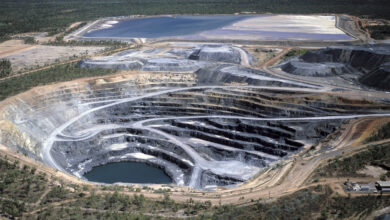
South Africa’s increasing rate of mine closure is creating significant environmental and socioeconomic consequences, particularly in areas where mining has historically served as the economic and social backbone of communities. With approximately 6 100 abandoned, ownerless and unrehabilitated and mines across the country, there is a growing need to strengthen mine closure governance, improve rehabilitation practices, and ensure that closure planning responds more effectively to both environmental liabilities and long-term community resilience.
However, this raises an important question that sits at the heart of mine closure and rehabilitation: how can rehabilitation and closure create opportunities for the next generation, rather than simply manage the impacts inherited from the previous one?
During the LaRSSA 13th Annual Conference held the previous week, WSP’s Sibo Khumalo reflected on what it means to truly “close the loop” in mine rehabilitation, drawing on both personal experience and professional practice in closure and rehabilitation.

Mining’s historical role in community development
With roots in a mining community in the northern KwaZulu-Natal Province, Sibo brings a lived understanding of how historical mining investment in education and community infrastructure helped shape opportunities for future generations. His reflections were also inspired by professional work on a project that involved closure, rehabilitation and long-term water management solutions for one of the conglomerate of mines that had contributed to funding his early schooling within the mining community.
Historically, mining represented one of the foundational stages of corporate social investment, shaping both the landscape and local livelihoods. Beyond employment, mines often provided housing, schools, healthcare facilities, transport and water infrastructure, among other community facilities that became central to local development.
From compliance to long-term community transition
However, the conversation around mine closure is changing. Sibo’s presentation, Closing the loop: From beneficiary to practitioner in community-centred mine rehabilitation, explored how mining’s historical contribution can be connected to future community resilience.
It asks an important question: how do we ensure that the value created during operations continues to benefit communities after production ends?
This question is becoming increasingly important as closure governance, Social Labour Plan (SLP) commitments, together with long-term rehabilitation planning, are expected to deliver outcomes that endure beyond compliance as well as the operational life of a mine. As mines approach closure, social transition planning becomes critical to ensuring that affected communities are not left vulnerable once production ends.
Future-ready communities and generational shift
Furthermore, as mining communities undergo a generational shift, new expectations and understandings of social investment are emerging. Future generations are looking beyond traditional infrastructure investment and toward lasting opportunities through skills development, enterprise creation, alternative livelihoods, digital access, and meaningful participation in post-mining land-use decisions. These expectations are also being shaped by changing communication patterns, increased access to technology, and the growing influence of artificial intelligence, which are transforming how communities access information, participate in decision-making, develop new skills, and engage with future economic opportunities beyond mining.
Within WSP’s Closure & Rehabilitation, Future Ready approaches are utilised to provide a useful lens for anticipating how tomorrow’s climate, resources, society and technology trends may influence post-mining land uses and communities. This guides advisory beyond present-day requirements and consider future conditions in client conversations, project planning and delivery.
Environmental stewardship beyond rehabilitation
Simultaneously, successful closure must integrate environmental stewardship with social transition. Rehabilitation should not simply manage legacy impacts. It should help create resilient communities, productive post-mining landscapes, and sustainable economic opportunities that endure well beyond closure.
Closing the loop through social integration
Ultimately, from historical community investment to future-ready livelihoods, closing the loop means ensuring that mining’s legacy is measured not only by what was extracted, but by what remains standing for generations to come. In this context, social closure integration, informed by a Future Ready approach, becomes the bridge between rehabilitation practice, community transition, productive post-closure land use and long-term resilience, ensuring that mine closure supports communities beyond dependency after production ends.