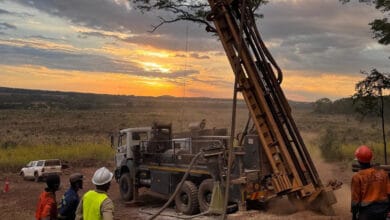
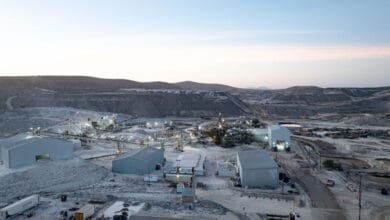
As the international mining community gathers in Windhoek for the Namibia Mining Expo & Conference, the spotlight shines on the country’s world-class uranium, high-grade copper, and fast-emerging lithium reserves. Yet, behind the investment excitement lies a harsh operational reality: extreme desert environments, immense logistics distances, and fragile supply chains.
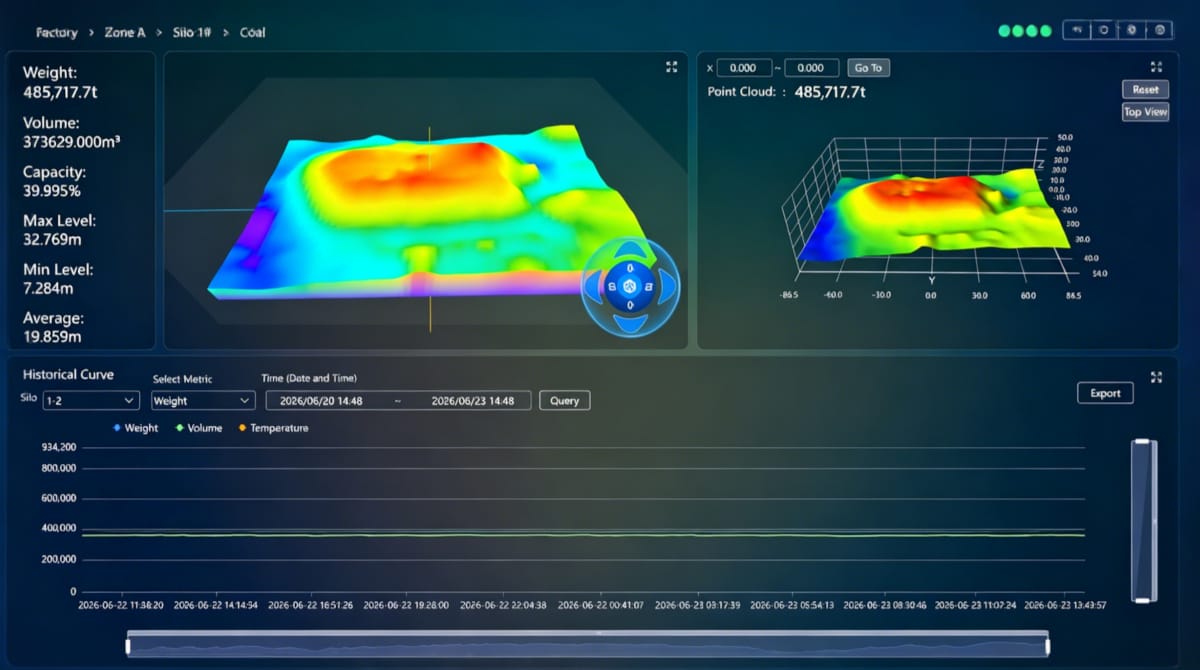
In Namibia’s arid terrain, diurnal temperature swings trigger constant thermal expansion of storage structures. This structural stress, combined with abrasive desert winds and industrial process dust, creates an operational nightmare. Traditional optical or acoustic sensors deployed in stockpiles and semi-enclosed domes frequently suffer from lens abrasion, signal blockage, and mechanical failure.

The Hidden Drain: Supply Chain Friction & Structural Risks
In Namibia, operational margins are tightly bound to long-distance international logistics. Because key mining consumables must be imported, logistics lead times are exceptionally long.
For remote operations handling high-value concentrates (like copper, uranium cake, or lithium), inventory errors create severe risks:
- Stockouts vs. Capital Lockup: Underestimating stocks halts production (idle plants), while overestimating locks precious cash in slow-moving physical inventory.
- Silo Structural Integrity: Irregular discharge of high-density ores causes severe asymmetric loading, risking catastrophic silo deformation or collapse.
- Walvis Bay Demurrage: Discrepancies between mine-site records and Port of Walvis Bay shipping manifests trigger severe rail logistics delays, shipping penalties, and demurrage.
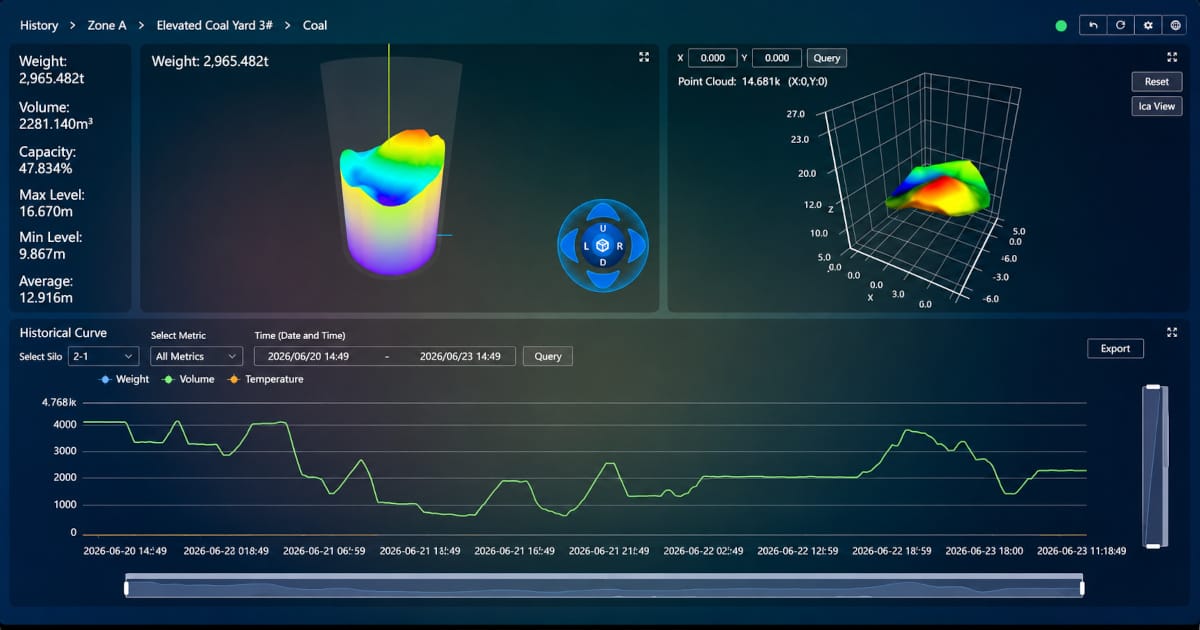
The Technological Leap: 3DPro2300 Radar Imaging
To eliminate these vulnerabilities, leading Namibian operators are shifting away from manual physical surveys and failure-prone laser scanners. Instead, they are adopting robust, non-contact radar-based volume scanning systems, specifically engineered for the extreme environments of African mining.
The Physics of Dust Penetration: Traditional laser scanners operate on short optical wavelengths (approx. 900 nm), which scatter instantly when hitting dust particles. In contrast, the 3DPro2300 Radar Scanner utilizes high-frequency, non-contact millimeter-wave radar. These longer wavelengths effortlessly penetrate heavy airborne dust, extreme moisture, and turbulent air currents, capturing precise material surface coordinates where optical sensors see only a blank wall.
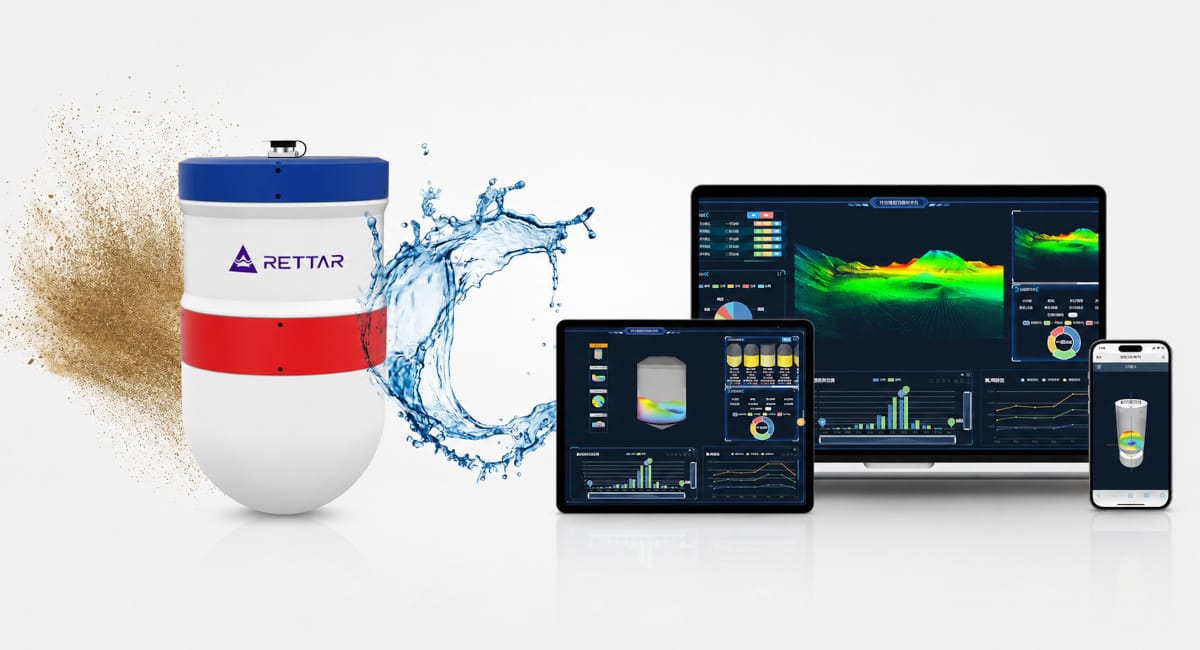
| Feature | Standard Lasers | 3DPro2300 Radar |
| Dust & Abrasive Winds | Fails / Scratched Lens | 100% Penetration (Non-Contact) |
| Volume Precision | 80% – 85% (Due to rat-holing) | 98% Verified Accuracy (Point Cloud) |
| Site Maintenance | Weekly cleaning & calibration | None (Zero moving parts, no wear) |
Typical bulk materials do not form perfect geometric cones. They suffer from irregular rat-holing and uneven discharge. The 3DPro2300 solves this by actively scanning the entire material surface, generating a high-density point cloud to calculate the actual volume with a verified 98% accuracy rate.
Optimizing TransNamib Rail & Export schedules
In a market where materials are transported hundreds of kilometers from remote inland mines via railway or road to Walvis Bay, having absolute certainty of stockpile volume changes the game. By utilizing 3D inventory intelligence, Namibian miners can synchronize inland production with transport capacity seamlessly, preventing costly port demurrage fees and securing long-term relationships with global critical-mineral buyers.