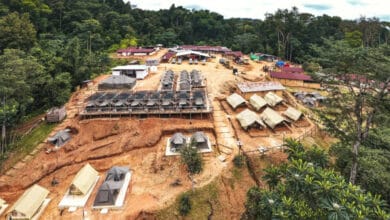
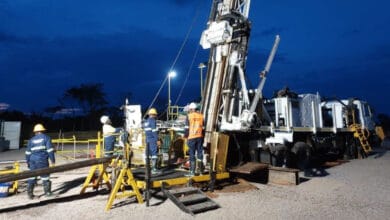
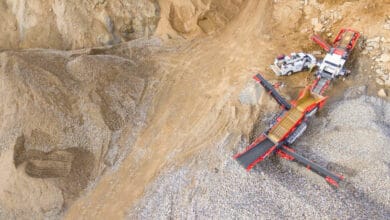
The Government of Tanzania and Panda Hill Tanzania Limited have officially signed an agreement to advance the Panda Hill niobium project in Mbeya. The deal formalizes government participation through a 16% free carried interest, positions Tanzania to contribute 4% of global niobium supply, and includes the construction of a ferroniobium plant, local value addition, and thousands of jobs over the project’s life.
The project includes a niobium mine, processing facilities, and a ferroniobium plant, the first of its kind in Africa, and will enable Tanzania to contribute approximately 4% of global niobium supply, with annual production targeted at around 100,000 tonnes. Under the agreement, the Government will hold a 16% stake through a free carried interest, ensuring national participation in strategic decisions and project benefits.
The signing was attended by the Treasury Registrar, Mr. Nehemiah Mchechu, and Minister of Minerals, Anthony Mavunde.

Minister Mavunde said the project aligns with the Government’s vision to increase value addition in the mining sector, moving beyond raw extraction toward industrial production.
He highlighted that niobium is used in high-strength steel, electric vehicle batteries, aircraft engines, and MRI equipment.
Panda Hill Tanzania Limited General Manager Dennis Cook stated that the project has entered a new implementation phase following long-term negotiations with the Government.
Next steps include obtaining a Special Mining Licence, updating feasibility studies, integrating grid electricity, and assessing international ferroniobium markets, including the United States.
Treasury Registrar Mchechu noted that the initial investment of US$442 million is expected to be recovered within 5 to 8 years, while government revenues over the project’s life, including royalties, taxes, and dividends, are projected at US$686 million (approximately TZS 2 trillion).
The government’s 16% equity alone is expected to generate US$134 million (around TZS 300 billion) for infrastructure and social services.
The project will also create jobs, with over 1,600 positions during construction and 600 permanent jobs, and total direct and indirect beneficiaries estimated at approximately 7,000. Construction of a new modern prison valued at TZS 20 billion will relocate the existing Songwe agricultural prison from the project site, covering 5,434 acres.
The project is expected to integrate Tanzania into global industrial value chains by supplying ferroniobium to markets in Africa, Asia, Europe, and the United States. Procurement of goods and services over the life of the mine is projected at TZS 4 trillion, with significant participation from local companies.
The Panda Hill deposit was discovered in 1950 by the Geological Survey of Tanzania. The project underwent multiple development phases, with feasibility studies and preparatory work completed before reaching the current implementation stage.
Global niobium production is concentrated among a few producers: Brazil accounts for about 80% of supply, another Brazilian producer around 11%, and Canada 6%.
Through the Panda Hill project, Tanzania aims to become the fourth-largest producer worldwide and participate directly in industrial value chains by supplying ferroniobium to markets in Africa, Asia, Europe, and the United States.