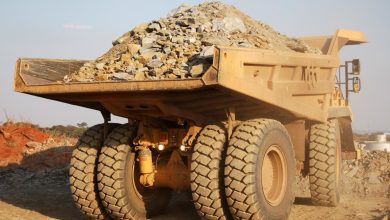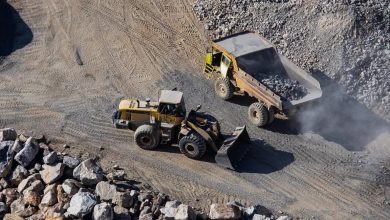
About 10 million tonnes of South Africa’s manganese exports still moved by road in 2025, even as the country shipped a record 26.2 million tonnes of the ore. EBC Financial Group (EBC) highlights that mismatch is the reason the planned 16-million-metric-tonne Ngqura manganese terminal in the Eastern Cape is more than a port project. For a country that holds about 70% of global manganese resources, moving close to two-fifths of exports by truck suggests the binding constraint is no longer ore demand. It is the freight system needed to move ore from inland mines to ships at scale.
Ngqura’s planned capacity equals about 61% of South Africa’s manganese exports last year. That scale is large enough to change how a meaningful share of ore reaches export markets. EBC notes that the terminal raises export capacity only if more ore reaches the berth by rail. A port facility can load cargo, but it cannot solve an inland bottleneck on its own.
David Precious, Senior Markets Analyst at EBC Financial Group, said, “South Africa’s constraint is no longer ore availability or export demand. It is the cost and reliability of moving bulk minerals from mine to port. When a country ships record manganese volumes yet still sends about 10 million tonnes to the coast by road, that points to a freight system that is absorbing demand rather than scaling with it.”

Coal and Iron Ore already show the cost of weaker logistics
Coal exports from Richards Bay Coal Terminal rose 11% to 57.66 million metric tonnes in 2025, the highest level in four years, as rail performance improved. That was still far below the 76 million tonnes exported in 2017. This comparison shows that better rail performance can lift export volumes, but South Africa is still operating well below the capacity it once moved through the system. Kumba Iron Ore reported that rail performance improved to 84% of contracted volumes in 2025, helping raise sales and reduce on-mine stockpiles to 5.7 million tonnes from 6.9 million tonnes a year earlier. That means more ore were moved out of storage and into the export chain as logistics improved. The reverse has also been expensive as Transnet’s underperformance has already cut into coal and iron ore exports, cost mineral exporters billions of rand in lost revenue, and forced some producers to curb output.
Mining contributed 5.8% of South Africa’s nominal gross domestic product (GDP) in 2025, equal to about ZAR 439.2 billion. Mineral ores and related products accounted for about 52% of merchandise export value, while mining contributed more than ZAR 100 billion to the national fiscus through taxes, royalties and value-added tax (VAT). Those figures explain why freight underperformance is not only a mining-sector problem. It affects export receipts, tax revenue, and the reliability with which cargo reaches overseas buyers.
Rail reform has started: The transport mix is the next scorecard
Eleven private train operators have advanced to the next stage across 41 routes and six corridors on South Africa’s state-owned freight rail network. The government expects those operators to add 20 million tonnes of freight capacity a year from the 2026/27 financial year and support a national target of moving 250 million tonnes a year by rail by 2029. EBC says that reform matters because it is meant to increase train movements on existing lines, not simply add another policy commitment to a system still rebuilding lost capacity.
Chrome shows why the transport mix is the right measure to watch, with industry data indicating chrome ore exports reached 23.4 million tonnes in 2025, and about 9 million tonnes moved by truck. That is equivalent to more than 826 trucks a day and carries a cost premium of about 40% compared with rail. The analytical point is straightforward. South Africa is still moving export volume, but too much of that volume is using a higher-cost road route because rail capacity has not been sufficient. The same imbalance is now visible in manganese.
Transnet plans to invest ZAR 127 billion over five years to modernise rail lines and upgrade ports, after allocating ZAR 24 billion to infrastructure in the previous financial year and budgeting ZAR 25 billion for the current year. EBC sees that programme as a practical scorecard rather than a backdrop detail. The most useful signs of progress are concrete: higher rail freight volumes, stronger port throughput, and a lower share of manganese ore moving by truck. Those are the numbers that would show whether South Africa is improving the full export route from mine to vessel rather than adding capacity at only one point along it.
“Ngqura only becomes economically meaningful if it changes the transport mix” Precious added. “If rail access reform, port upgrades, and capital spending start lifting freight volumes and reducing truck haulage, South Africa can convert mineral strength into export earnings more efficiently. If that shift does not happen, the country risks adding terminal capacity at the coast whilst the inland bottleneck continues to cap volumes and raise costs.”