The mining sector’s significant progress in health and safety – with fatalities declining from 200 to 41 over the two decades from 2005 to 2025 – has been supported by improved skills development.
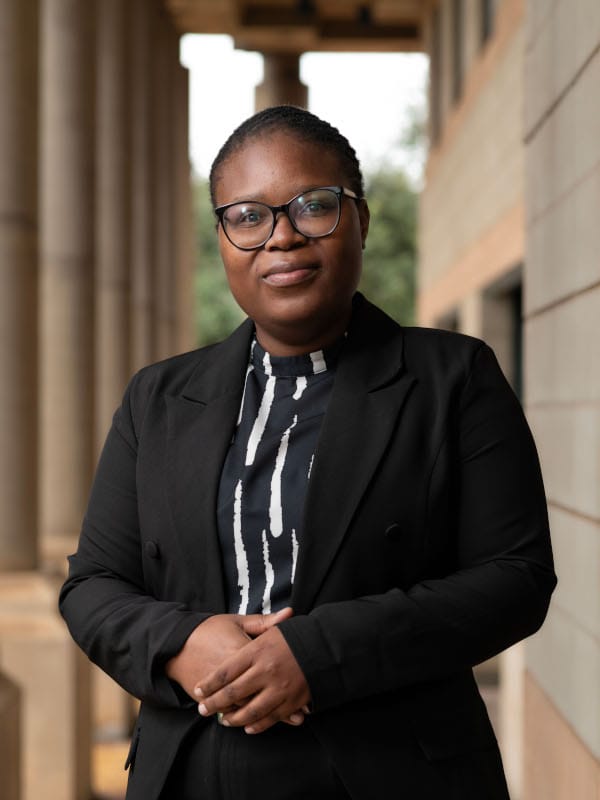
According to the newly appointed director of the Wits Mining Institute (WMI), Dr Pontsho Twala, training has been key to this progress, ensuring that employees have the knowledge and competence to identify hazards, respond effectively to risks, and work safely. This has helped move the sector beyond compliance towards a more integrated, evidence-based and practitioner-led training model. Over the years, the WMI has built expertise in occupational health and safety (OHS), and is again rolling out its OHS training programme in 2026. According to Dr Twala, the programme reflects both the complexity of modern mining and the WMI’s broader multidisciplinary mandate.
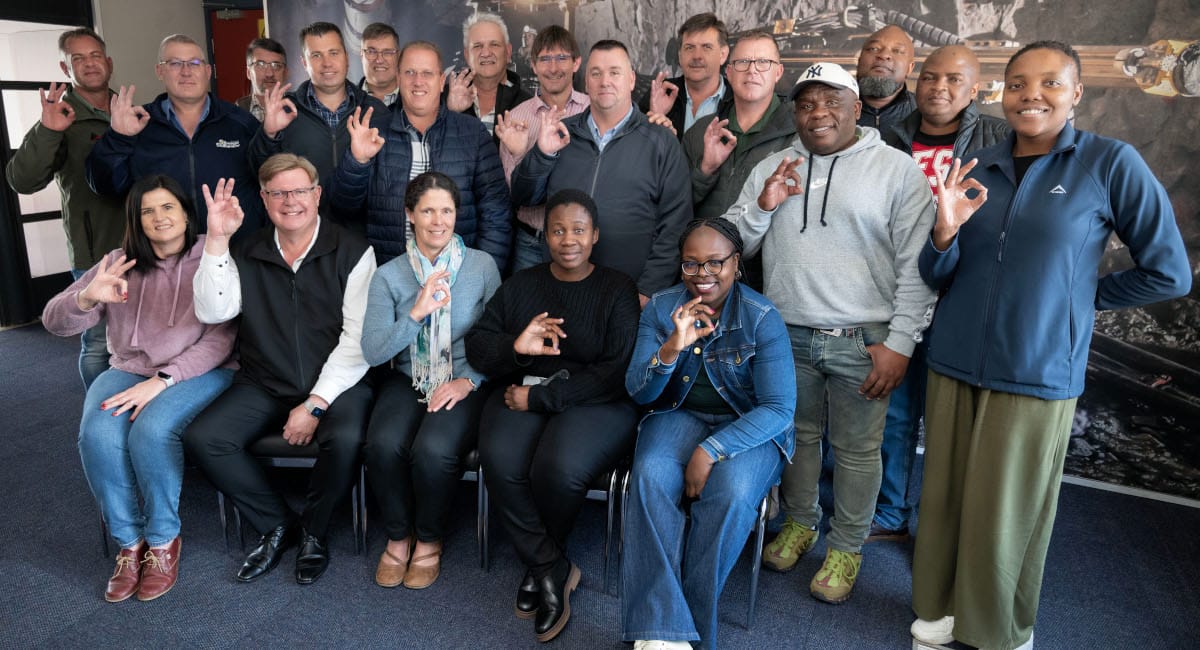
With the support of Sibanye-Stillwater, the OHS training programme was developed for their employees to strengthen health and safety capabilities, and is now available to the wider sector – to grow the capacity of OHS practitioners across mining in South Africa.

The course was developed in response to gaps in existing safety training in the mining sector. Research by WMI found that much of the industry’s current training is fragmented, leading to inconsistent safety performance. This highlighted the need for an industry‑recognised programme that provides a strong foundation for practitioners leading health and safety in operations.
The programme is accredited by the University of the Witwatersrand, and is supported by evidence‑based research, ensuring practical relevance to the mining sector’s operational and safety challenges. For the WMI, the OHS programme also represents its broader strategic direction of translating research into tangible skills development, she pointed out.
“Since 2023, we rolled out the programme exclusively to Sibanye-Stillwater operations,” said Dr Twala. “The success of the programme in the last three years has led to us opening it up to the wider mining industry.”
At the core of the 2026 offering are two structured pathways: a foundational course comprising three modules, and an advanced certificate in OHS practice. The first builds a baseline understanding of the mining environment, legislation and risk management, while the second develops higher-order analytical capability over a five- to six-month period.
Integrating theory, practice
“What distinguishes the WMI’s training approach is its deliberate integration of theory, practice and systems thinking,” explained Dr Twala. “The programme content explicitly links OHS to the mineral value chain, ESG considerations and operational decision-making. This ensures that safety is not treated as a function within a silo, but as part of a broader production system.”
Another defining feature of the courses is the emphasis on critical thinking – particularly within the Advanced OHS certificate course. Instead of relying on prescriptive rules, participants are trained to interrogate safety challenges within their own operations.
“We give the participants tools that enable them to look at OHS as a system that is connected to other components within a mining operation,” she said. “This is important because it enables them to look beyond the obvious.”
Real-world issues
This is operationalised through a strong applied research component. Participants are required to identify a real-world issue within their workplace and work through a structured process of problem definition, data collection, analysis and communication.
“We take them through the process of defining the issue, investigating it and collecting the necessary data,” she explained. This approach aligns with the programme’s broader goal of cultivating a proactive safety culture – where risks can be interrogated before incidents occur, and system weaknesses can be addressed.
The WMI also uses an innovative delivery model for its programmes. Unlike traditional classroom-based instruction, its courses are highly interactive and draw heavily on industry expertise.
Learning with practitioners
“We get beyond the theory by inviting practitioners who understand the environment and the challenges,” she said. “Participants do not just listen; they engage, exchange experiences and discuss what is working on the ground and what is not.”
Being able to work with a major mining house, she says, adds valuable practical relevance, while supporting the WMI’s ambition to establish an industry-wide benchmark for OHS training.
Working professionals
The courses are structured to suit the needs of working professionals, with modules delivered in a hybrid format to combine online learning with face-to-face sessions. Continuous assessment is done through assignments and applied tasks. Participants who have completed the programme have said that this approach fits well with their work commitments and helps them apply what they learn at work.
2026 schedule
The WMI runs its the OHS courses in three different cycles during 2026. While Course 1 – on the Mineral Value Chain for OHS – has already been run once, it will be offered again in June and September. Course 2, focusing on Fundamentals of OHS in Mining, runs in May, August and October 2026. Course 3 on OHS Practice in Mining will run in July and October this year, and again in February 2027.
In addition to its training courses, the WMI will be hosting stakeholder dialogues under the theme “Beyond the Fence: How Community Environments Shape Health and Safety Performance in Mining” with the first dialogue taking place on 27 May 2026. As the sector works to meet the milestones agreed to in 2024, there is a need to better understand the external factors that influence workplace health and safety performance. This dialogue series will provide a platform for stakeholders to explore the links between social, economic, and community conditions and health and safety outcomes in mining – a topic that has not received much attention.
WMI will also deliver Executive Training on OHS in 10 – 11 September 2026, targeted at senior leaders and decision-makers in the mining sector.
“Health and safety responsibility sits at all levels, and senior leaders play a key role in setting priorities, culture and accountability across the organisation”, she said.
Building vital skills for safer, sustainable mining
As part of its mandate to serve Africa’s fast-evolving mining sector, the Wits Mining Institute (WMI) is once again rolling out its exciting programme of industry-focused courses and events for 2026.
The 2026 programme includes a series of industry dialogues and seminars to strengthen professional capacity and provide a platform for stakeholders to jointly identify challenges, share insights and develop practical responses.
Among its popular offerings is the Advanced Certificate in Occupational Health and Safety Practice in Mining, alongside its OHS-related short courses scheduled throughout the year.
The WMI will also host learning events such as Executive Training OHS (10 – 11 September), as well as ‘dialogues’ in topics such as: Occupational Health and Safety (27 May, 24 June and 23 September); Youth and Mining (18 June); and Critical Minerals and Skills (TBC).
“We are also part of the Artisanal and Small-Scale Mining (ASM) forum in collaboration with the Society, Work and Politics Institute (SWOP) at Wits, and we will be hosting monthly seminars,” said Dr Twala.
There will also be a WMI seminar entitled From Legacy to Leadership – Shaping Sustainable Mining Futures, to be held on 03 and 04 September this year, followed by a WMI Student Research Symposium on 28 November.
“We are excited about our 2026 programme and the opportunities it offers to engage with industry partners, share knowledge, and exchange experiences.” “These are key issues that industry needs to discuss, particularly around legacy of mining, which will be the focus of our annual seminar,” she said.
By combining academic research, industry expertise and practical training, the WMI’s 2026 programme continues to support the development of the skills required for a safer, more sustainable mining industry in South Africa and across the continent, she said.