In the race toward smarter, safer and more efficient mines, one technology often sits quietly in the background: sensors. For De Beers’ Upstream Technology, sensors are not just part of the system; they are the foundation on which automation, digitalisation and modern mine design are built.
Upstream Technology was formed in 2024 following the amalgamation of De Beers Marine and Ignite. The aim was to ensure a fully integrated end-to-end system for upstream operations.
Michael Curtis, Head of Upstream Technology, is unequivocal about the importance of sensors. “Sensor technology is the foundational building block of any automation. Your sensors need to be working reliably and accurately before you can automate anything. If your sensors fail, your automation fails.”

According to Curtis, this explains why so many early automation projects in mining under-delivered. “Previously, companies invested heavily in software and control systems, but the underlying sensing layer was unreliable. When the inputs are wrong or unstable, every automated decision based on them becomes suspect,” he states.
Upstream Technology’s philosophy is to first get the sensing right and build automation on top of that. Only after those two layers are stable does it make sense to add advanced analytics or artificial intelligence.
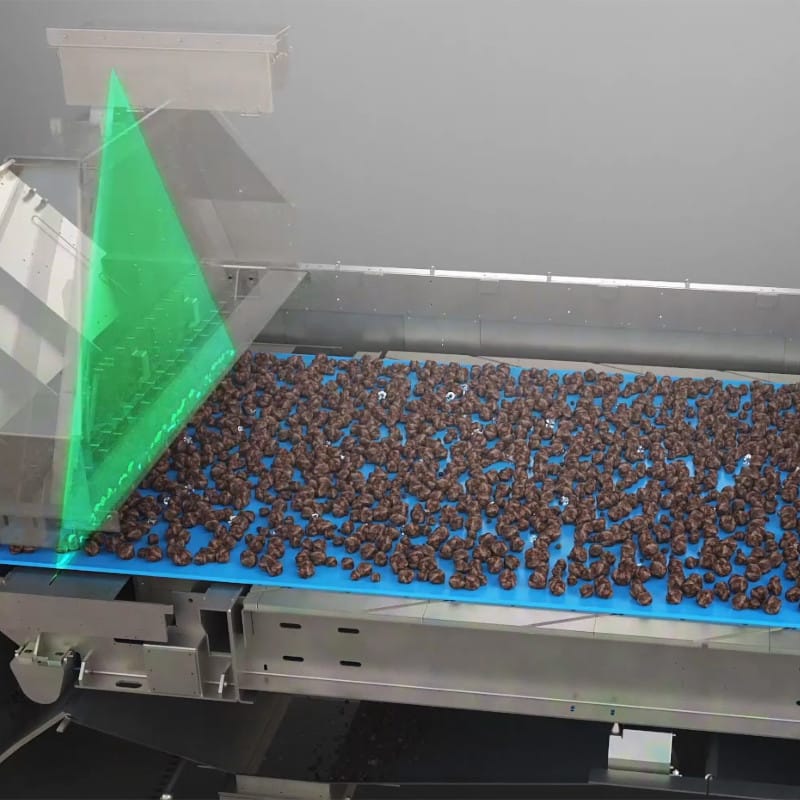
Nowadays, sensors touch almost every aspect of upstream diamond mining. In processing plants, they measure flows, levels, pressures and densities to keep circuits within tight operating windows. On equipment, they monitor temperatures, vibrations and loads to support predictive maintenance and avoid catastrophic failures.
One example of where sensor technology has optimised operations is crawler mining on the seabed. Curtis explains: “Crawler mining offshore used to be very manual. There used to be two pilots on the surface, operating joysticks. It required continuous human effort to control heading and mining rate.
Today, that same machine is sensor-driven and largely automated. Here, sensors track position, heading, depth and machine health, allowing the system to run largely on autopilot. This has resulted in significant improvements in mining rate and significant improvements in recovery efficiency because its headings are right.
Sensors are equally important for safety in underground operations. Upstream Technology is deploying LiDAR and laser scanning to tackle fall-of-ground risk by mapping roof support and verifying that each bolt is correctly installed. Instead of putting people close to the hazard to inspect support, sensors do the seeing.
People and tech go hand-in-hand
Despite the progress Upstream Technology has made in automation and digitalisation, Curtis emphasises that technology is never enough on its own. “Technology doesn’t work without the right culture. If people bypass systems, the technology won’t work. If people don’t pay attention to systems, the intent of the system fails and it puts them at risk.”
He points out that sensors provide the eyes and ears of the modern mine. They enable automation, inform management decisions and improve safety. However, they must be paired with training and a strong safety culture to deliver their full value.
As mining moves toward compact, connected, low-carbon operations, one principle from Upstream Technology stands out: get the sensing right first – everything else depends on it.