Wia Gold targets 177,000 ounces annual production at Kokoseb
Wia Gold is planning to produce an average of 177,000 ounces of gold annually during the first five years of mining at its Kokoseb Gold Project.
The company is advancing permitting, infrastructure planning and resource expansion drilling ahead of a development decision.
The production target is based on an open-pit mining operation feeding a 5.25-million-tonne-per-annum carbon-in-leach (CIL) processing plant.

Over an initial 11.4-year mine life, Kokoseb is expected to produce an average of 146,000 ounces of gold annually, with higher-grade ore driving stronger production during the early years of the operation.
The mine plan is based on the latest mineral resource estimate. It envisages the extraction of 427.8 million tonnes of material, including 58.9 million tonnes of ore grading 0.97 grams per tonne gold and containing 1.83 million ounces of gold. Waste material is estimated at 369 million tonnes, resulting in a strip ratio of 6.3.
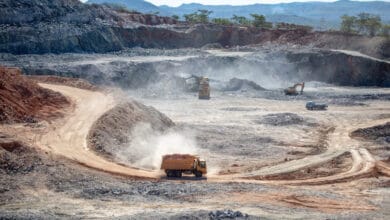
Mining would be undertaken using a conventional load-and-haul open-pit operation, with the pit divided into 10 development stages.
Wia plans to deploy 200-tonne-class excavators matched with 90-tonne haul trucks, while mining rates are expected to peak at 45 million tonnes per annum.
The company said pit development would initially focus on higher-value zones to maximise early project returns.
The processing plant has been designed around conventional and well-understood technology. Ore would undergo primary crushing through a gyratory crusher before entering a semi-autogenous and ball mill grinding circuit.
Gold recovery would be achieved through gravity concentration, intensive leaching and carbon-in-leach processing.
Metallurgical test work indicates gold recoveries of more than 90%, with cyanide destruction and filtered tailings incorporated into the plant design.
As the company advances technical studies, it is simultaneously progressing critical infrastructure planning. Wia has submitted an application to NamPower for a 31-megawatt electricity supply.
A study undertaken by the utility identified a dedicated 132-kilovolt connection from the Omburu Substation near Omaruru as the preferred power solution for the project.
Water requirements have also been advanced, with the company applying to NamWater for 1.5 million cubic metres of water per year.
Proposed supply sources include the Okombahe Water Supply Scheme, the Ozondati Water Supply Scheme and the Omaruru Alluvial Plains groundwater system.
Road infrastructure is another key component of the development strategy. The project is located north of the C36 Omaruru-Uis road and would require construction of a new 12.7-kilometre access road linking the mine site to the existing transport network.
Permitting activities are also progressing. Wia submitted its mining licence application to the Ministry of Industries, Mines and Energy on 10 October 2025.
The Environmental and Social Impact Assessment and Environmental and Social Management Plan were formally submitted to the Ministry of Industries, Mines and Energy and the Ministry of Environment, Forestry and Tourism on 19 March 2026.
While advancing development planning, the company continues to pursue resource growth through extensive drilling programmes.
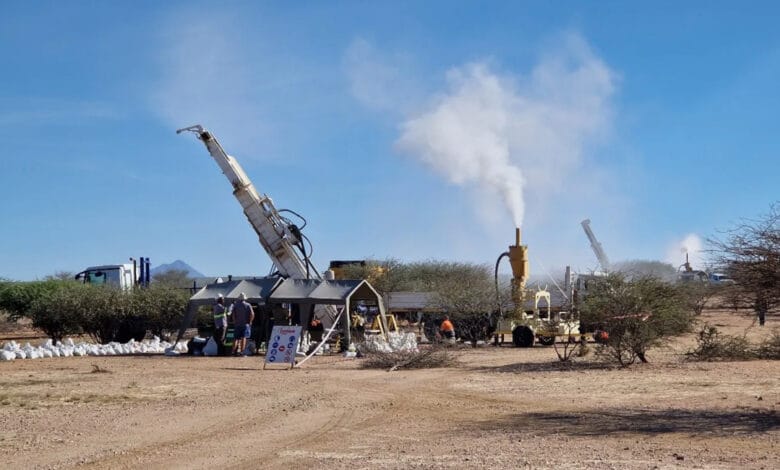
Reverse circulation infill drilling has been completed in the Northern and Gap zones to upgrade portions of the resource into the higher-confidence indicated category.
Recent results include 8 metres at 7.66 grams per tonne gold from 75 metres in hole KRC449, 16 metres at 2.14 grams per tonne gold from 38 metres in KRC480 and 15 metres at 1.62 grams per tonne gold from 138 metres in KRC457.
At the same time, six diamond drill rigs are targeting high-grade plunging shoots below the scoping study pit shell as Wia works towards defining an underground resource. An updated underground mineral resource estimate is expected during the second half of 2026.
The Central Zone continues to return significant mineralisation outside the current resource estimate, including 27 metres at 3.31 grams per tonne gold, including 11 metres at 5.21 grams per tonne gold in hole KDD097, and 21.9 metres at 4.32 grams per tonne gold, including 9.7 metres at 7.27 grams per tonne gold in KDD040.
The Southern Zone has delivered some of the highest-grade results encountered at Kokoseb to date, including 50 metres grading 12 grams per tonne gold, incorporating 6 metres at an exceptional 91.88 grams per tonne gold in hole KRC437. Additional drilling returned 26 metres at 2.18 grams per tonne gold, including 5.7 metres at 5.87 grams per tonne gold in hole KDD021.
The combination of a large open-pit resource, strong metallurgical recoveries, advancing permitting and infrastructure planning, and ongoing high-grade underground discoveries positions Kokoseb as one of Namibia’s most closely watched emerging gold projects. With an underground resource update expected later this year and development studies advancing, Wia is increasingly focused on transforming the discovery into a producing gold mine.