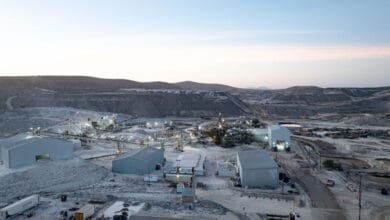
With a well-established copper mining sector and much of the country’s mineral wealth unexplored, the Zambian mining industry is poised for a potential period of substantial growth and expansion.
This growth trajectory is reinforced by several factors, including strong Zambian government support, starting with the introduction of a new online and transparent mining cadastre. In addition, legislation guiding the opening of new businesses makes Zambia an attractive investment destination. The country’s central location – connected to the planned upgrade of the Lobito Corridor to Angola and a new rail corridor to the east coast – further enhances its role as a potential future export hub for critical minerals to global markets.
Stability and accessibility
Mining is a long-term investment, and Zambia’s recent political stability suggests it could be established as a favourable destination, where investors can expect a reasonable return on investment (ROI) over the lifecycle of a mine. Civil unrest is relatively uncommon and does not threaten business operations.

Additionally, Zambia is easily accessible, with relaxed visa regulations for visitors from South Africa in particular. The dominance of English as the language of business makes it easier for South African companies to do business, compared to some of its Francophone and Portuguese-speaking neighbours.
The government has set a target to secure reliable energy for households and industry by 2032, as the current unreliable power supply remains a significant constraint for large mining and manufacturing operations. Solar projects are planned for domestic consumers, and energy independence among large-scale industries is being encouraged through both renewable sources, imported energy, and extension of the current grid.
Mapping unexplored regions
Even as the country looks to push copper production, aiming to grow annual output of refined copper from 890,346 to three million tonnes by 2031, and expanding into a ‘new’ copper belt in the North-Western Province, diversification is part of Zambia’s mining growth strategy.
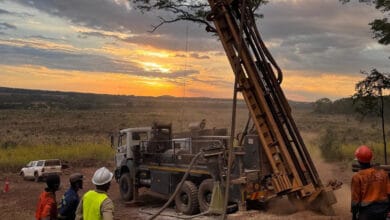
Plans to map the unexplored regions for critical and transitional minerals, including copper, cobalt, lithium, nickel, and rare earth minerals are in place, supported by a nationwide detailed geophysical campaign covering over half of Zambia’s land mass. Funded by both national government and private companies, the country’s ambitious exploration programme and comprehensive mapping of underexplored areas are important in attracting would-be investors who require data and information about what lies underground, before committing to costly new exploration projects.
SRK establishes base in Kitwe
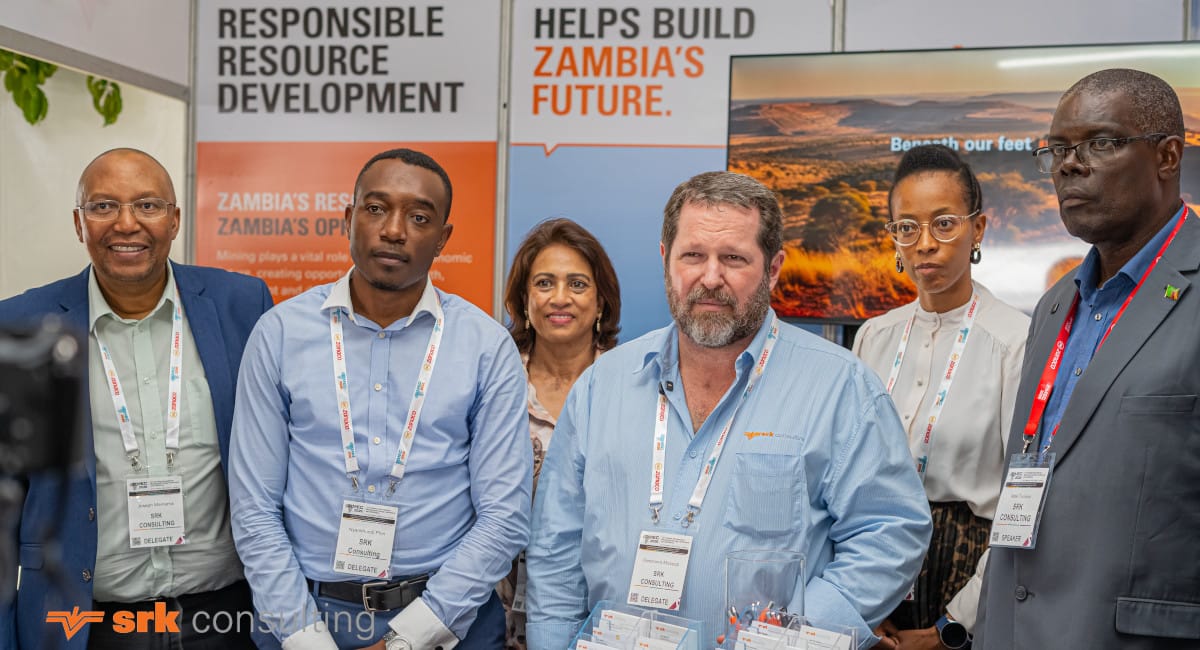
Given this favourable outlook for Zambia, SRK is establishing a practice located at the heart of the country’s mining hub in Kitwe. Zambia’s mining culture means that the country has a wealth of home-grown expertise, and the new practice will be staffed by qualified and experienced local engineers and scientists in our employee-owned business model.
Elevating standards and compliance
As new investors enter the country – including from the Middle East and India – expectations of meeting international best practice standards of mining extraction and environmental stewardship need to be met. In addition, wider adherence beyond local to global regulations, including the Copper Mark and the Global Industry Standard on Tailings Management (GISTM), makes investment in Zambia’s mining sector more attractive. Zambia is fully committed to its own success, and SRK is well placed to assist the country in achieving it.
With growth comes greater risks
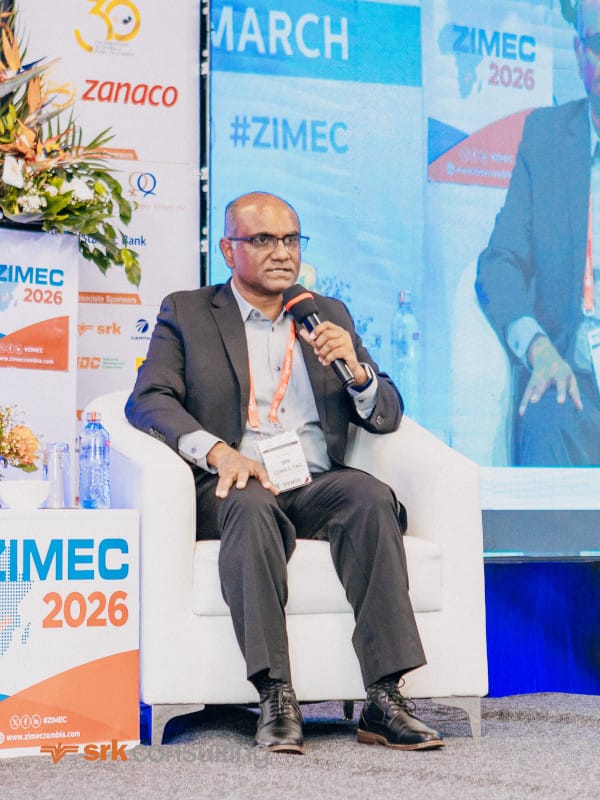
However, the expansion of Zambia’s mining sector – the number of existing operators looking to optimise productivity, new entrants, and widespread exploration projects – will all necessarily lead to greater risks to both people and the environment. Geotechnical risks associated with both foundation conditions where dolomite is present, as well as deeper extraction (so-called super open pits and underground operations), plus those associated with water, ground, and air contamination, make safe mining practices of paramount importance for new ventures and for the preservation of Zambia’s environmental integrity. The potential contamination of surface and underground aquifers that support local communities, and risks from storms and floods, especially regarding the safe operation of tailings dams, all require complex risk management, which SRK is ready to provide to new and existing Zambian operations.
With decades of experience in managing mining-related risks, a deep understanding of Zambia’s ground conditions, and an employee-owned business model that aligns with localisation, SRK is well-positioned to assist Zambian clients in mitigating risks while optimising mining value at their operations and projects into the future.
A strategic partner in Zambia’s future
With ambitious plans for mining expansion and many of its rich mineral deposits yet to be explored, the future for Zambia’s mining sector looks promising. SRK will be there to assist, support, and advise on all aspects of the new and existing ecosystem and is committed to ensuring that mining practices in this southern African nation are sustainable in the long term, while delivering on objectives for the benefit of everyone. SRK is committed to partnering with mining companies in Zambia so that they attain the social licence to operate.