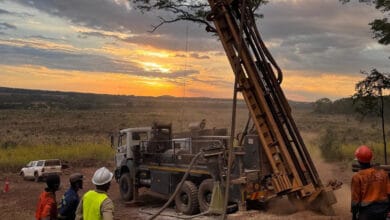
Formal sector employment in the mining sector declined by 1 785 workers to 471,882 in the third quarter (Q3) of 2024. Total employment across all surveyed sectors was down by a substantial 129 389. This is according to Stats SA’s latest Quarterly Employment Statistics (QES). The Q3 decline for mining follows the start of retrenchments in parts of the industry during the first half of 2024, implying a third consecutive quarter of job losses in the mining sector. Cumulatively, in the first three quarters of the year, the mining sector lost almost 10 000 (9 893) jobs. Stats SA provides a split between gold and non-gold employment, which indicated that 93% of the mining job losses so far in 2023 were in the non-gold mining industry.
Based on publicly available information, we know that these retrenchments have mainly been in the platinum group metals (PGMs) sector. The constraints in the PGMs sector have been well documented and mainly relate to sustained low metal prices, which have weighed heavily on profitability in the sector. Ultimately, the (delayed) response to this was restructuring and cost cutting, including the unfortunate rightsizing of the labour force. It must be said the other parts of the mining industry have been increasing employment of late, including in primary chrome mining where production and exports continue to perform well. Staying with chrome, the ongoing unrest in Mozambique is of particular concern to this sector. In the first three quarters of 2024, just over 50% of South Africa’s chrome exports were shipped from the port of Maputo.
In terms of the non-mining sectors of the economy, there was a notable quarterly decline of 127 604 formal sector jobs in the third quarter. Importantly, this was overwhelmingly a function of lower temporary employment in the community, social and personal services sector. This includes people temporarily employed by the Independent Electoral Commission (IEC) during the May 2024 national and provincial elections. Temporary IEC workers lifted the overall employment stats in Q2, but these workers were no longer employed in Q3. This explains the large employment decline in the non-mining sectors during the third quarter.

When the decline in mining and the temporary IEC workers are stripped from the numbers, there was a marginal increase of 3 122 in total formal sector employment. Most of this increase came from the trade sector, which includes retail, wholesale, retail and motor trade, hotels and restaurants, as well as the construction industry.
Looking ahead: Even when excluding the job losses in mining and the distortion arising from the temporary IEC workers, there was only a very modest rise in formal employment during the third quarter. This emphasises the importance of removing the binding constraints that are holding back real GDP growth in South Africa. This requires faster and sustained progress on structural reforms, including an improved Transnet rail and port performance. Given that the mining sector faces potential global headwinds in 2025 from a Trump tariff war and an uncertain Chinese growth outlook, it is essential that the domestic blockages to the sector be removed speedily. This would provide some shield against an uncertain international environment, which is bound to impact currency values, mining sector input costs, and commodity prices.