Madagascar’s mining freeze thaws at a crossroads of instability and global demand
By: Arman Sidhu
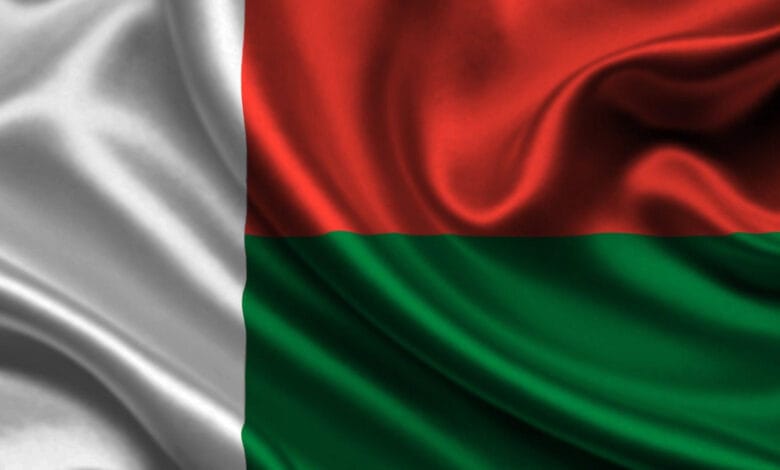
Madagascar’s decision to resume mining permit issuance in January 2026, ending a sixteen-year freeze, comes at a volatile intersection of surging critical mineral demand and deep political instability. The moratorium, imposed in 2010 after the 2009 constitutional crisis, is now being lifted by the military government that overthrew President Andry Rajoelina in October 2025. The country is the world’s second-largest graphite producer behind China, holds rare earth deposits comparable to southern China’s ionic clays, operates one of Africa’s largest nickel-cobalt complexes, and sits atop world-class mineral sands. Five distinct geopolitical blocs are now competing for access under a government that Transparency International scores at 25 out of 100.
Who lifted the moratorium matters as much as the lifting itself. Colonel Michaël Randrianirina’s coup was triggered by youth- and student-led protests over chronic poverty and corruption. The African Union suspended Madagascar immediately, and the EITI placed the country under enhanced scrutiny, giving it one year to demonstrate compliance or risk delisting. Yet the new government moved quickly to signal openness to foreign capital, granting Australian explorer Akora Resources a 25-year mining permit for its Bekisopa iron ore project within months of taking power. A mining code enacted in July 2023, before the coup, raised royalties from 2% to 5% and established a mandatory Social Mining Fund, but whether the military government will honor this framework remains uncertain.
The competition for Madagascar’s resources spans five blocs. Japan’s Sumitomo and South Korea’s KOMIR jointly own the US$8 billion Ambatovy nickel-cobalt complex, the largest foreign investment in the country’s history, while POSCO International holds a 10-year offtake agreement with NextSource Materials for 30,000 tonnes of flake graphite annually. The United States is positioning through Energy Fuels’ Vara Mada mineral sands project, which an updated feasibility study values at US$1.8 billion net present value with a 38-year mine life. China operates as the indispensable buyer, purchasing the vast majority of Madagascar’s graphite and leveraging control of over 90% of global graphite processing capacity. The EU has designated Evion Group’s Maniry graphite deposit as a strategic project under the Critical Raw Materials Act.

The structural vulnerability is near-total dependence on Chinese processing. The IEA’s Global Critical Minerals Outlook 2025 found that removing China from global graphite supply chains would leave barely 35% to 40% of projected 2035 demand covered. A UC Davis study modeled that if China’s production were halved, Madagascar’s global share could jump to 15%, but only if processing capacity materializes outside China. NextSource’s planned battery anode facilities in Mauritius and the Gulf are early steps, though both remain pre-construction.
Three policy imperatives follow. First, Western development finance institutions (the DFC, EIB, and IFC) should condition new project financing on adherence to the 2023 mining code, particularly the Social Mining Fund and the higher royalty structure, regardless of the governing authority in Antananarivo. Second, non-Chinese graphite processing infrastructure, starting with NextSource’s planned downstream facilities, should receive expedited multilateral support to break the processing bottleneck that limits Madagascar’s strategic value. Third, the African Union and SADC should maintain pressure for a civilian transition while engaging constructively on mining governance, ensuring that EITI compliance benchmarks are met within the one-year window. Madagascar offers generational mineral assets at a moment of acute global need. The permit thaw is real, and the geological endowment is world-class, but without institutional safeguards, the island risks becoming the latest case study in resource wealth failing its population.